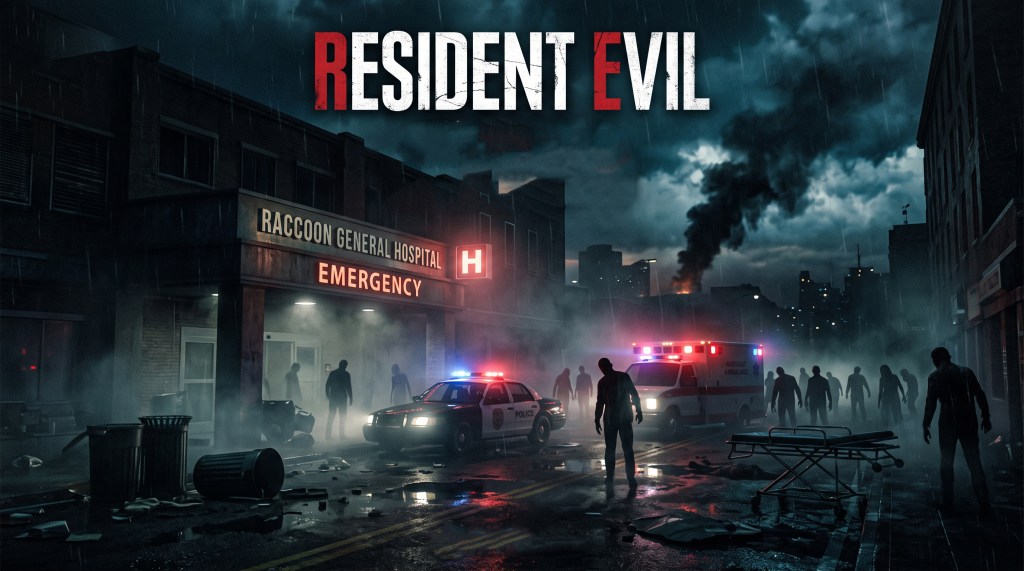
By Fernando Castillo
As a Resident Evil fan since 1999—when I first experienced the terror of being attacked by Nemesis on the police station stairs in Resident Evil 3: Nemesis—it is impossible for me to watch Zach Cregger’s new film without a mix of technical admiration and deep conceptual frustration.
I’ll put it directly: if Zach Cregger had given this film any other title—say, Zombie Attack in the Snow, or a one- or two-word title like he usually does—we would be talking about an absolute 10/10 within apocalyptic survival horror cinema.
However, he made the mistake of messing with one of the most iconic and passionate franchises in the video game world.
A Script Disguised as Resident Evil
My critique doesn’t stem from fanboy nitpicking, but from the project’s very genesis. Cregger himself revealed that he had already completed the core of this script between mid-2023 and 2024, right during the transition period following the impact of Barbarian (2022) and before shooting Weapons (2025). In fact, he even admitted in interviews that this was a horror story he would have wanted to write regardless of whether he secured the rights to the brand or not.
And it shows in every single frame. The movie was not built from the ground up to honor Capcom’s mythology; it was an original body-horror script in the vein of The Thing or Evil Dead II that was retrofitted with the name «Raccoon City» to sell it to a major studio, along with a couple of Easter eggs sprinkled into a few scenes—such as the typewriter traditionally used to save progress on memory cards, the first-aid sprays visible in the barn scene before the protagonist jumps, the shotgun above the fireplace alongside the search for ammo, keycard locks marked with card suit symbols (like the diamond key), and a few first-person shots echoing the video games.
If we isolate the film, setting aside the massive weight Resident Evil carries as a franchise, Cregger’s concept is fresh and highly entertaining; it even made me jump out of my seat two or three times—something previous Resident Evil movies never accomplished.
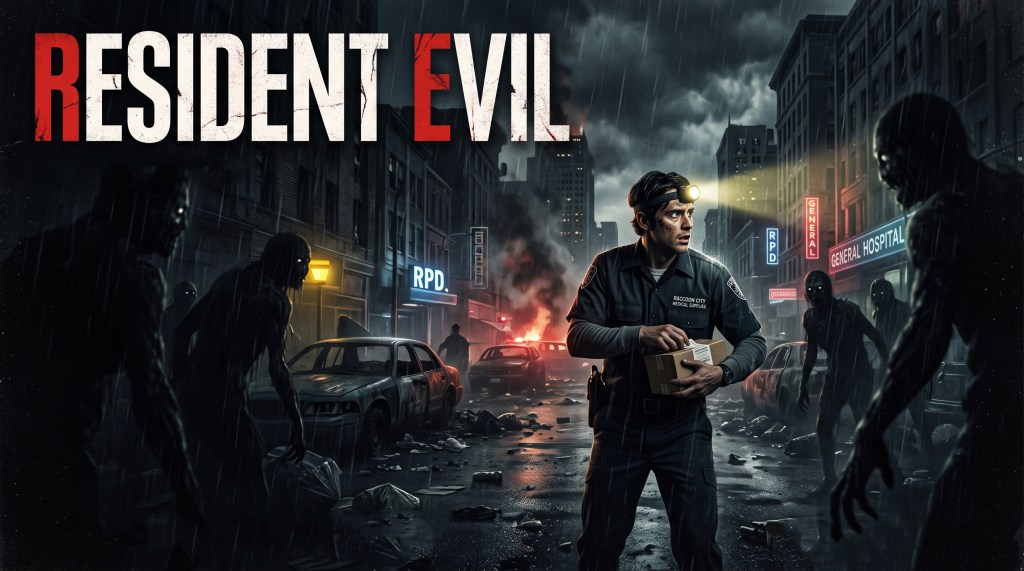
Furthermore, instead of putting indestructible heroes wrapped in plot armor into the script, it follows Bryan—a simple medical courier who suffers through the terror, conserves ammunition, searches for keys, and reacts with genuine panic and ineptitude to the disaster, much like many of us did when playing the games. I felt that exact level of stress, which made me think: «Damn! I probably would have reacted the exact same way.»
The way he translates the internal structure of video games—meticulous exploration, item management, and solving puzzles in claustrophobic environments—demonstrates a remarkable mastery of cinematic pacing and tension.
The problem arises when you remember the title on the marquee and the reason you decided to buy a ticket in the first place. It feels almost like bait-and-switch marketing. For the community that has followed the saga for decades, the film feels like a betrayal of the lore:
- Zero Iconic Characters: There is no trace of Jill Valentine, Leon S. Kennedy, Chris Redfield, or the terrifying Nemesis.
- Disregard for the Franchise’s Biology: The infection isn’t explicitly treated as the T-Virus or G-Virus, favoring viscous mass mutations and tentacles closer to alien horror.
- Narrative Deviation and Divisive Tone: The absence of Umbrella’s corporate conspiracies and the decision to include moments of dark comedy or illogical twists in the final act dilute the seriousness the franchise demands.
There isn’t a script in the traditional narrative sense. I’m certain there would be no difference between watching it in English or dubbed into Spanish. While I don’t know much about script length or formatting, I am sure this one in particular focuses primarily on action and suspense, followed by a soliloquy of repetitive phrases from the main character. The only deep dialogue occurs when he decides to talk to his girlfriend or leave her a farewell voice message.
In Conclusion
Zach Cregger proved to be a talented director capable of building an impeccable survival nightmare, but by slapping the Resident Evil label onto an idea clearly born as an indie project, he alienated the core audience expecting a faithful adaptation. It is a top-tier cinematic spectacle, but simply the wrong franchise to tell that story.
Without a doubt, it remains a great option to catch in theaters just to enjoy the sound design, grab some popcorn, hot dogs, or nachos, and get out of the house for a bit. If you want to enjoy it without prejudice, just leave the Resident Evil name at the door and enjoy the jump scares.







Deja un comentario