By Fernando Castillo
When popular culture tackles a historical criminal file, it often favors spectacle over documentary truth. The double homicide of Andrew Jackson Borden and Abby Durfee Borden, committed on August 4, 1892, in Fall River, Massachusetts, remains one of the most debated chapters in American legal history. However, beneath the noise of sensationalist journalism and recent television adaptations—such as the series Monster: The Lizzie Borden Story—the procedural reality has been buried under layers of gothic fiction and modern myths.
For those of us who research true crime through the lens of historical criminology and forensic anthropology, reopening the Lizzie Borden case requires casting aside sensationalism to examine the original file across three fundamental analytical layers: forensic evidence, Victorian context, and human background.
The Evidence: Forensic Chronology and the 1893 Trial
Contrary to what dramatizations suggest, the 1892 forensic evaluations established a methodical timeline of the homicides. The first attack occurred around 9:00 a.m. in the guest bedroom. Abby Borden was making the bed when she was ambushed: she received an initial blow to the side of her head that knocked her unconscious, followed by 18 additional strikes with a heavy sharp object to her neck and back.

Nearly two hours later, Andrew Borden returned home at 10:40 a.m. after conducting business downtown. Around 11:10 a.m., the younger daughter, Lizzie Borden, raised the alarm to the maid Bridget Sullivan, claiming someone had attacked her father. Andrew’s body showed between 10 and 11 deep cuts to his face and skull while resting on the sofa.

During the trial held in New Bedford in June 1893, the prosecution—led by Hosea M. Knowlton and future Supreme Court Justice William Henry Moody—built its case on circumstantial evidence:
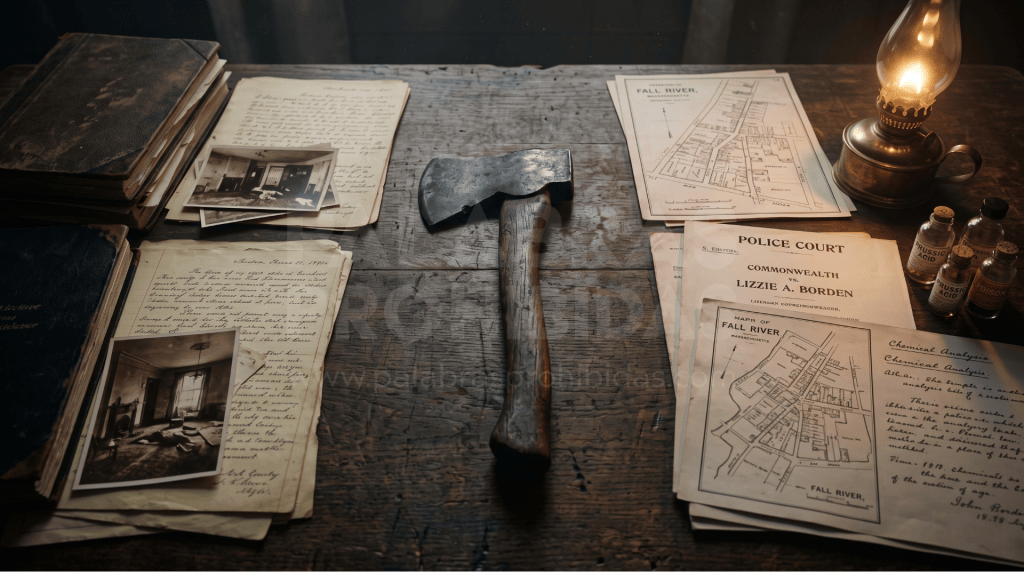
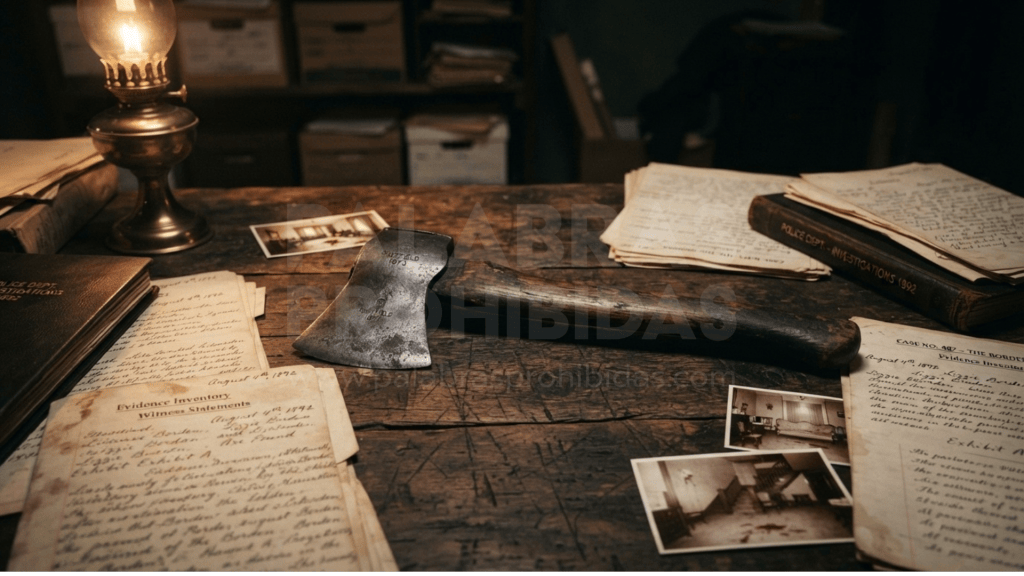
Absence of blood and unconfirmed weapon: Although a handleless hatchet head covered in ash was found in the basement, forensic experts could not prove it was the murder weapon, nor did they find indelible bloodstains on Lizzie’s clothing.
Burning of the dress: The prosecution highlighted the testimony of a neighbor who witnessed Lizzie burning a blue dress in the stove days after the crime, an action Lizzie defended by claiming the garment was ruined with fresh paint.
Inadmissibility of poison: Lizzie’s prior attempt to purchase prussic acid (hydrogen cyanide) at a local pharmacy was ruled inadmissible by the court, as it bore no connection to the physical cause of death.

Lacking a confession or direct witnesses, and following the presentation of the victims’ severed skulls in the courtroom—an event that caused the defendant to faint before the jury—the defense capitalized on the biases of the era.
The historical biases of the Victorian Era
Defense attorney George D. Robinson centered his strategy on normative Victorian gender stereotypes. He argued before an all-male jury that an educated woman of local bourgeois standing, active in her Sunday church and dedicated to charitable works, was physically, morally, and psychologically incapable of perpetrating such butchery. On June 20, 1893, the jury delivered a verdict of «not guilty».

The case file reflects the inherent contradictions of a legal system in transition: the failure to preserve the crime scene, the lack of advanced forensic techniques (such as fingerprinting or genetics), and class and ideological biases prevented establishing the perpetrator’s identity with mathematical certainty.
Fiction vs. The File: Inventions of Popular Culture

From this point on, you will find spoilers about what happened in the series. If you haven’t watched it yet, now is the time to stop reading.
When researching this case for El Malamén, it is essential to highlight how commercial productions distort the documentary record to craft psychological melodramas:
| Case Axis | Documented Historical Record (1892–1893) | Fictional Inventions (Monster, Netflix) |
|---|---|---|
| Andrew Borden’s Profile | Fall River bank investor and textile magnate known for extreme frugality. | Carpenter and embalmer obsessed with sharpening his axes. |
| Slaughter of the Pigeons | Andrew decapitated pigeons in the barn with a hatchet for hygiene reasons. | Abby Borden decapitates the birds to torment Lizzie. |
| Bridget Sullivan’s Role | Domestic servant and key prosecution witness; strictly professional relationship. | Graphic romance and intellectual/physical co-authorship of the crime. |
| Bertha Manchester Murder | Occurred on May 30, 1893, committed by laborer José Correa de Mello. | Attributed to Lizzie Borden in 1892 as a criminal «dress rehearsal». |
| Anachronisms | Friendship with actress Nance O’Neil began in Boston in 1904. | O’Neil coaches Lizzie in 1893 to manipulate the Victorian jury. |
Conclusion

Lizzie Borden spent the remainder of her life secluded in the Maplecroft mansion under Fall River’s social ostracism until her death in 1927. Turning a domestic double homicide into a fable of revenge or modern rebellion obscures the reality of the victims and the memory of an era.
Investigating historical archives is not about repeating fictions or translating unverified content; it means confronting the reasonable doubt of the past with the forensic rigor of the present.
References
- Famous Trials / University of Missouri-Kansas City. (1893). The Lizzie Borden Trial Transcript and Documents.
- Historical Journal of Massachusetts. (2018). The Lizzie Borden Murder Trial: Gender, Class, and the Law in Victorian America.
- National Geographic. (2020). Who was Lizzie Borden—and did she really kill her parents?





Deja una respuesta